
Bees can feel electric fields with their hairs
Bees can feel electric fields with their hairs
Fact-checked · 1 verified sourceReviewed by the CurioVault curator · 16 October 2026 · Editorial standards
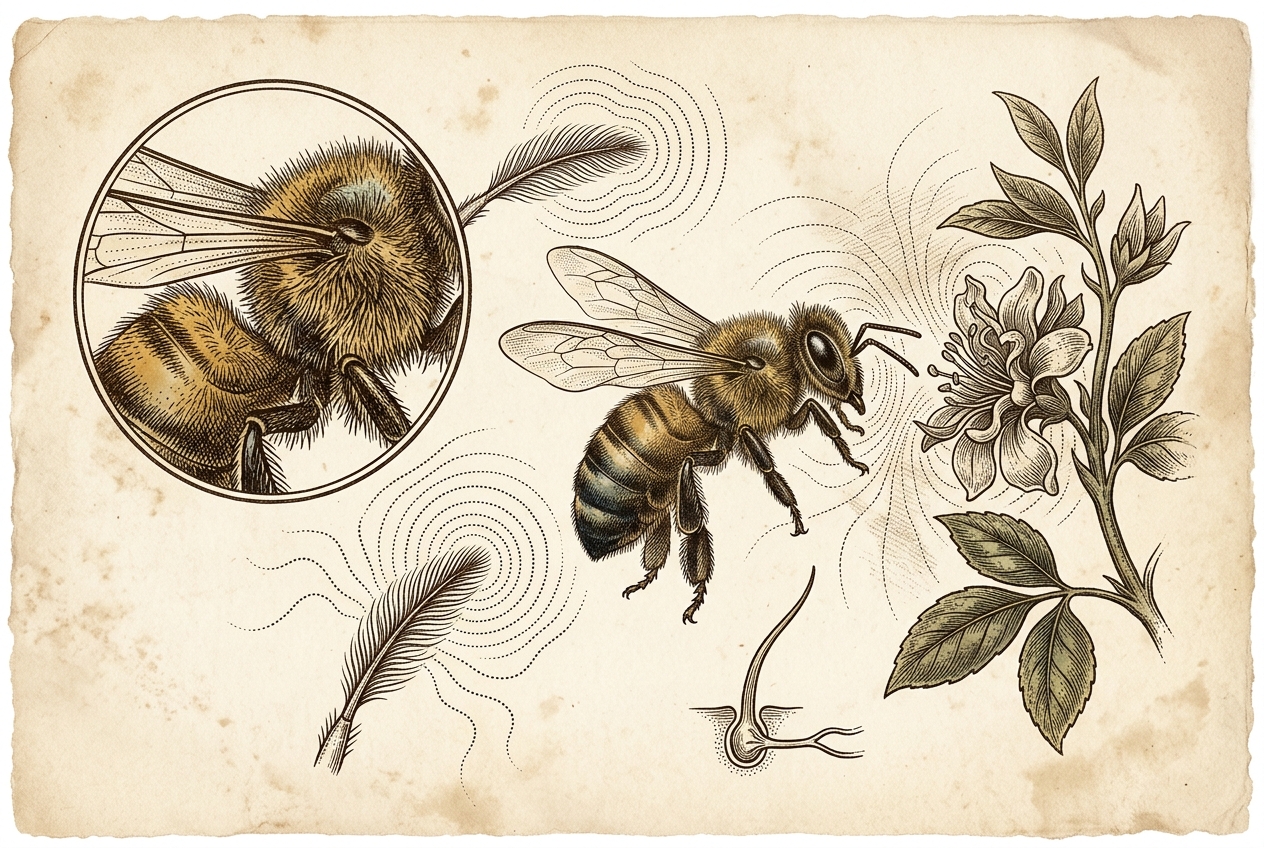
Imagine a world of unseen forces, an invisible landscape guiding creatures through their daily lives. For the humble bee, this is a reality. These diligent pollinators possess a remarkable ability to perceive electric fields, navigating a hidden electrical topography that humans can only begin to comprehend. Every foraging trip is guided by this silent, sensory information, plain to bees but utterly imperceptible to us.
Why it happens
As a bumblebee journeys through the air, friction causes its tiny body to accumulate a positive electrical charge. Flowers, meanwhile, typically maintain a slight negative charge. This difference in electrical potential is more than just a curiosity; it serves a crucial purpose. When a charged bee lands on a flower, the electrostatic attraction significantly assists pollen grains in leaping onto the bee's body, optimising the pollination process. Furthermore, the bee's visit leaves a temporary alteration in the flower's electric field, a subtle change that other visiting bees may detect.
How we know
The fascinating extent of this ability came to light through dedicated research. In 2013, researchers at the University of Bristol made a significant discovery: bumblebees can learn to distinguish between different flowers purely by their distinct electric field patterns. They effectively use these fields as an 'invisible colour' to locate nectar rewards. The precise mechanism behind this perception was uncovered by the same group in 2016. It was found that the numerous tiny hairs covering a bumblebee's body bend when exposed to these faint electric fields. Nerve cells located at the base of each hair then fire, transmitting the sensation to the bee's brain. This means the bee senses these fields primarily through its hairs, rather than its antennae. This represented one of the very first known instances of an insect sensing electric fields in the air.
Did you know?
The perception of electrical stimuli, known as electroreception, is a biological ability found almost exclusively in aquatic or amphibious animals. Water is a much better conductor of electricity than air, making it far easier to detect electric fields within it. Many fish species, for instance, utilise electroreception to locate prey by sensing the electric fields they generate, a process called passive electrolocation. Others, known as weakly electric fish, actively create their own weak electric fields using a specialised electric organ and then detect distortions in this field caused by nearby objects. While electric eels are known for generating strong electric discharges to stun prey, the bumblebee's ability to sense faint fields in the air truly sets it apart from the common understanding of electroreception.
Test yourself · 3 questions
Were you paying attention?
1. How does a bumblebee primarily sense faint electric fields in the air?
2. What crucial purpose does the difference in electrical potential between a charged bee and a flower serve?
3. In what year did researchers discover that bumblebees can learn to distinguish between different flowers purely by their electric field patterns?
Sources & Further Reading
Connected Curiosities



This curio is written in original words for CurioVault. Facts themselves are not copyrightable, but our wording is. If you reuse, please credit CurioVault.co.